





Technologies
What is an Ultrasonic Flow Meter?
For operations that demand accuracy without compromise, ultrasonic flow meters provide a reliable, non-intrusive alternative to traditional measurement technologies. Clamp-on designs make installation fast and simple, enabling users to measure flow without shutting down processes or impacting system performance.
Introduction
An ultrasonic flow meter measures the velocity of a liquid using sound waves. Unlike mechanical or intrusive technologies, ultrasonic measurement operates without moving parts and without direct contact with the process fluid, delivering highly reliable, maintenance-free performance.
For industrial applications where uptime, safety, and flexibility are critical, ultrasonic flow meters provide a powerful alternative to traditional inline flow measurement devices.
Overview
-DSC00445-800x659.jpg?width=800&height=659&name=BCU-Teaser-with-Tubing-(Closed)-DSC00445-800x659.jpg "BCU-Teaser-with-Tubing-(Closed)-DSC00445-800x659")
How Ultrasonic Flow Meters Work
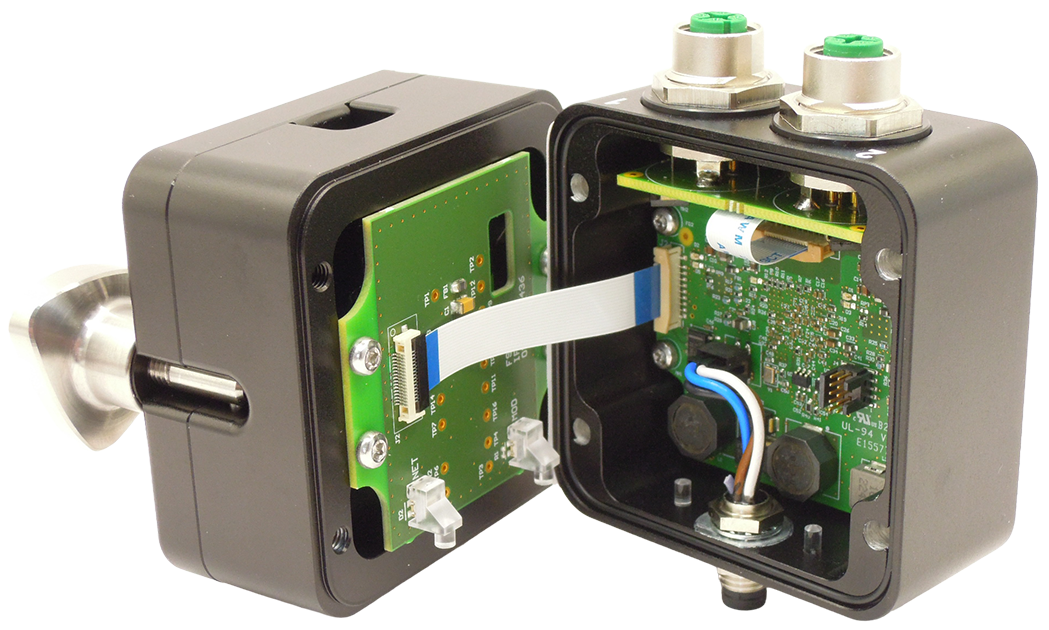
Ultrasonic flow meters operate on a transit-time measurement principle, using externally mounted sensors to transmit sound waves both with and against the direction of flow through a tube. As fluid moves, these signals travel at slightly different speeds depending on flow direction, and the resulting difference in transit time provides a direct, reliable indication of flow velocity. By correlating this data with the known dimensions of the tube, the system determines volumetric flow with a high degree of accuracy—without ever contacting the process fluid.
Understanding the Science Behind an Ultrasonic Flow Meter
Another technique, based on the Doppler effect, measures flow by detecting frequency shifts caused by particles or bubbles moving within the fluid. While useful in certain applications, Doppler-based measurement depends on the presence of reflectors in the liquid, making it less suitable for clean or pure fluids. By contrast, transit-time ultrasonic technology—particularly in clamp-on configurations—enables accurate, non-invasive flow measurement without requiring particles in the fluid or direct contact with the process. This makes it a more versatile and reliable solution across a wider range of industrial applications, especially where maintaining process integrity and measurement accuracy is critical.
Clamp-on ultrasonic flow meters are installed externally, eliminating the need to:
-
Cut pipes
-
Shut down operations
-
Interrupt production
This makes them ideal for retrofit applications and temporary or permanent installations.
Because nothing enters the process:
-
There is zero pressure loss
-
No risk of contamination
-
No exposure to aggressive or hazardous fluids
This is especially important in industries where process purity and safety are critical.
Clamp-on ultrasonic technology is well-suited for:
-
Corrosive fluids
-
High-purity applications
-
Large-diameter pipes
-
Systems where maintenance access is limited
With no moving parts, these meters deliver long-term stability with minimal upkeep.
Clamp-on ultrasonic flow meters can be:
-
Easily relocated between measurement points
-
Used for diagnostics or permanent monitoring
-
Applied across a wide range of pipe sizes and materials
This flexibility supports evolving process requirements without costly system modifications.
Why Choose Ultrasonic Flow Measurement
Ultrasonic flow measurement offers a fundamentally different approach compared to traditional flow technologies—one that prioritizes accuracy, reliability, and process integrity. By using sound waves to measure flow, ultrasonic flow meters, like the BCU Clamp-On Ultrasonic Flow Meter, eliminate the need for moving parts or direct contact with the fluid, reducing maintenance requirements while maintaining consistent, high-accuracy performance. This makes them especially well-suited for applications where downtime, pressure loss, or contamination cannot be tolerated.
Please use the chart to the left to understand some of the top reasons why should choose an clamp-on ultrasonic flow meter.
Clamp-On vs. Inline Ultrasonic Flow Meters
For many industrial users, clamp-on technology offers a lower total cost of ownership and faster deployment. While both technologies use ultrasonic principles, their implementation differs significantly. Clamp-on ultrasonic flow meters are mounted externally on the tube, eliminating the need to cut into the line or interrupt the process for installation. This non-intrusive approach reduces installation time and labor, avoids the need for specialized fittings or system redesign, and enables commissioning without shutdown—making it especially valuable in continuous or high-value production environments.
Because clamp-on systems do not come into contact with the process fluid, they also eliminate concerns around wetted material compatibility, contamination, or pressure drop. This simplifies maintenance and makes them well suited for applications involving corrosive, sterile, or high-purity fluids. In contrast, inline ultrasonic meters require direct integration into the flow path, which can increase installation complexity and introduce potential points of failure or process disruption.
Clamp-on technology also provides greater flexibility over the lifecycle of the system. Sensors can be repositioned, removed, or redeployed as process requirements evolve, supporting changing production needs without additional capital investment. Together, these advantages make clamp-on ultrasonic flow measurement a practical, efficient solution for operations focused on uptime, adaptability, and long-term performance.
Explore Ultrasonic Applications

Non-Invasive Flow Measurement in Perfusion Systems Using Clamp-On Ultrasonic Technology
Accurate and reliable flow measurement is essential for successful perfusion-based bioprocessing. The BCU Series Clamp-On Ultrasonic Flow Meter provides a non-invasive, stable, and automation-friendly solution that meets the demanding requirements of upstream single-use systems.
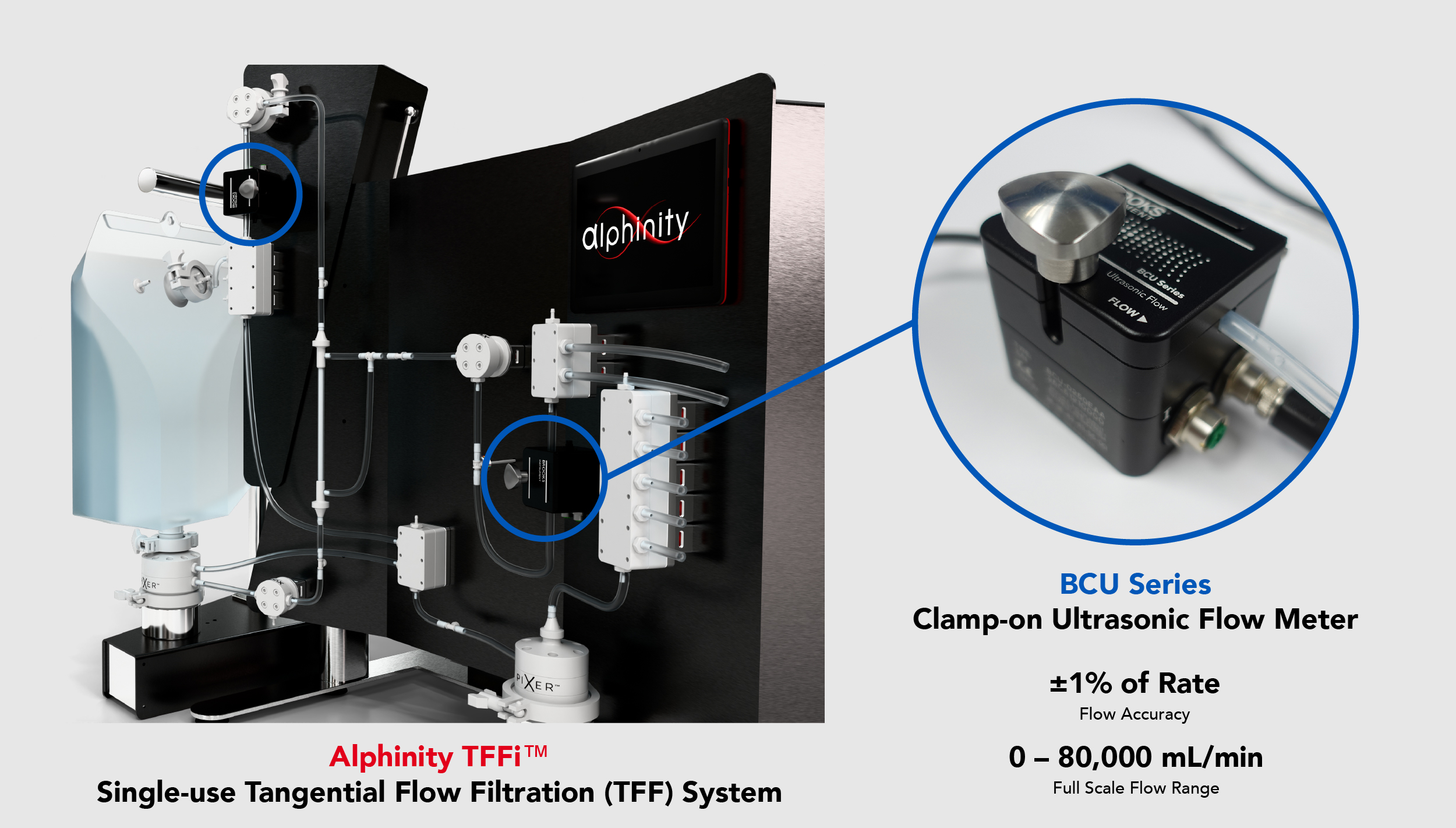
Clamp-On Ultrasonic Flow Monitoring in Tangential Flow Filtration Systems
Accurate flow measurement is essential for maintaining efficiency and consistency in Tangential Flow Filtration processes. The Brooks Instrument BCU Series Clamp-On Ultrasonic Flow Meter delivers a non-invasive, reliable solution that meets the demanding requirements of biopharmaceutical manufacturing.
Discover What’s Possible with Brooks Instrument
Ready to find the right solution? Our experts are here to guide you. Explore products, request support, or connect with a distributor today.