





Technologies
What is a Coriolis Flow Meter?
By measuring the effect of fluid mass moving through a vibrating sensor, Coriolis flow controllers determine true mass flow independent of fluid properties, pressure, and temperature, delivering stable, repeatable performance in critical processes.
Introduction
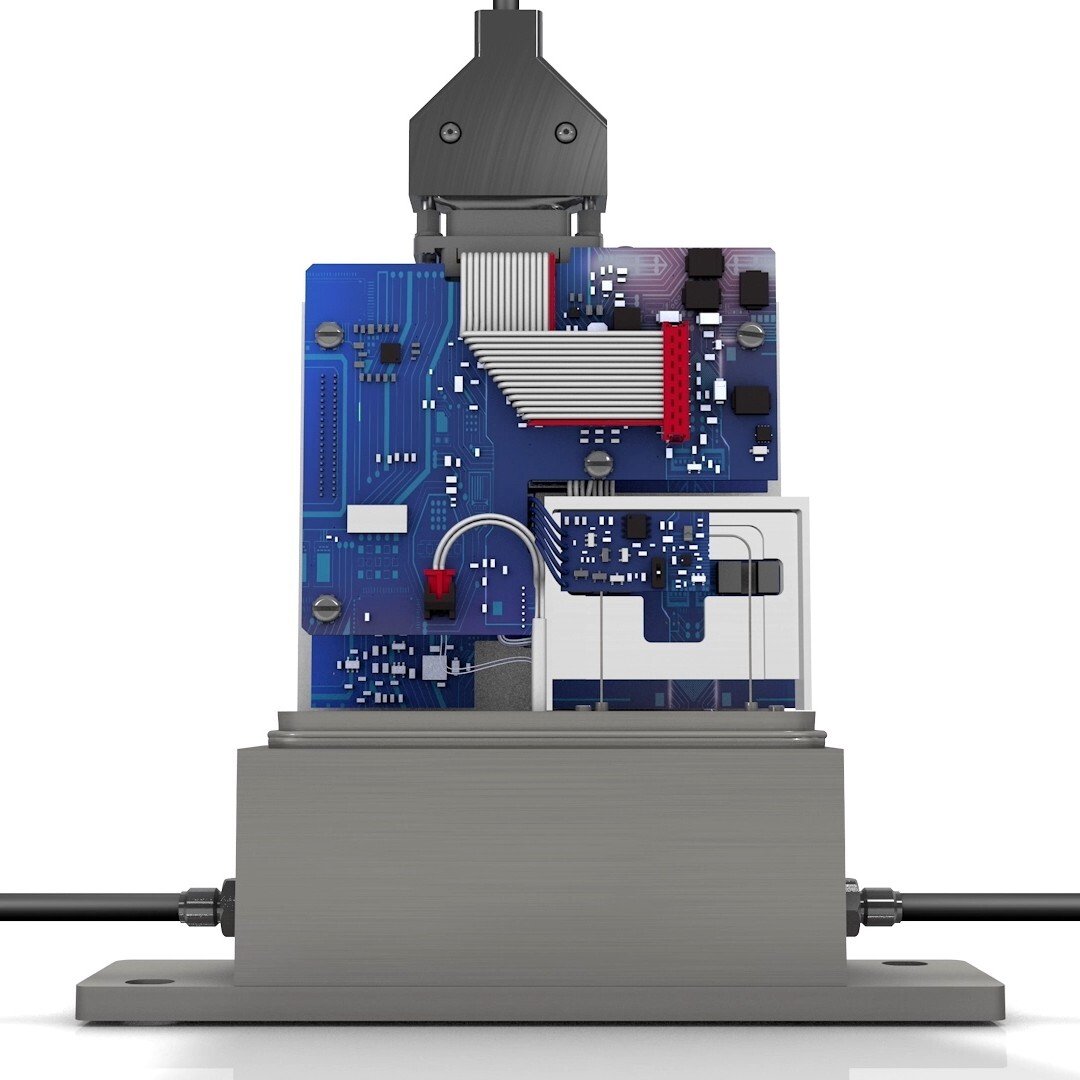
A Coriolis mass flow meter measures the mass flow rate of liquids and gases by detecting how the moving fluid interacts with a vibrating sensor tube. Inside the device, one or more tubes are oscillated at a controlled frequency. As fluid passes through these tubes, the inertia of the moving mass causes a slight twisting, or phase shift, in the vibration pattern. This deflection is directly proportional to the mass flow rate and is continuously measured by the instrument’s sensors.
Because this measurement is based on the physical properties of mass and motion rather than inferred variables, Coriolis technology provides a true, direct measurement of mass flow. It is inherently independent of changes in pressure, temperature, density, or fluid composition, making it especially valuable in processes where fluid properties may vary or are not fully known. In addition to mass flow, Coriolis meters can also provide highly accurate density and temperature measurements, enabling deeper process insight and tighter control.
Overview
What is the Coriolis Flow Principle?
In addition to mass flow, the natural vibration frequency of the tube changes with fluid density—denser fluids reduce the frequency, while lighter fluids increase it. By monitoring both phase shift and frequency, Coriolis flow measurement provides accurate, simultaneous measurement of mass flow and density, independent of pressure, temperature, or fluid composition.
Understanding the Science Behind Coriolis Flow
Coriolis mass flow meters operate by passing fluid through a vibrating tube and measuring how the moving mass interacts with that motion. The tube is driven at a controlled frequency, creating a stable oscillation. When no fluid is flowing, the vibration remains symmetrical. As fluid moves through the tube, its mass and velocity introduce inertial forces that cause a slight twisting of the vibration pattern, which is detected by sensors as a phase shift.
This behavior is rooted in the Coriolis effect—the tendency of a moving mass to experience a deflection when observed within a rotating or oscillating system. While commonly associated with large-scale phenomena like atmospheric flow, the same principle applies at the instrument level, where the oscillating tube creates the necessary dynamic frame of reference.
By measuring this induced deflection, Coriolis meters directly determine mass flow based on fundamental physics. The result is highly accurate, real-time measurement that remains independent of pressure, temperature, and fluid properties.
Why Choose Coriolis Flow Meters?
In addition to mass flow, Coriolis flow meters provide real-time density and temperature measurements from a single device. This multi-variable capability enables deeper process insight, tighter control, and reduced instrumentation complexity. For applications such as chemical dosing, blending, and precision fluid handling, this level of measurement confidence translates directly into improved product quality and process efficiency.
Explore Coriolis Flow Applications
Discover What’s Possible with Brooks Instrument
Ready to find the right solution? Our experts are here to guide you. Explore products, request support, or connect with a distributor today.