





Understanding Functional Safety in Flow Measurement
What Is SIL 2?
Functional safety helps protect people, equipment and the environment in industrial processes, with Safety Integrity Levels (SIL) defining the required level of risk reduction for safety instrumented functions. Understanding SIL 2 and how it applies to flow measurement can help engineers select appropriate instrumentation for safety-related applications.
Introduction
Functional safety plays an important role in protecting people, equipment and the environment in industrial process applications. Safety Integrity Levels (SIL) provide a framework for evaluating the reliability of safety instrumented functions designed to reduce process-related risks. SIL 2 is one of four defined levels under the IEC 61508 standard, with each level representing a different degree of required risk reduction.
In applications where flow measurement is part of a safety instrumented system, selecting instrumentation with appropriate functional safety capabilities is an important consideration. Understanding what SIL 2 means, how it applies to flow measurement and what to look for when evaluating flow meters can help engineers make informed decisions when designing and maintaining safer process systems.
Overview
What Does SIL 2 Mean?
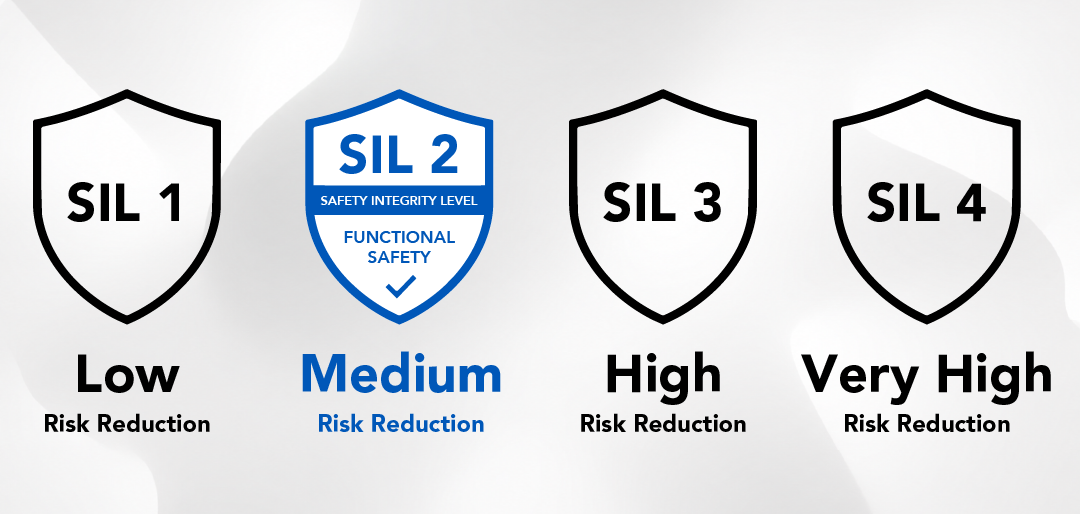
Safety Integrity Level (SIL) is a measure of the reliability required for a safety instrumented function to reduce risk in an industrial process. Defined by the international functional safety standard IEC 61508, SIL ratings range from SIL 1 to SIL 4, with higher levels requiring greater risk reduction.
SIL 2 is commonly applied in industrial process applications where safety systems must reliably detect hazardous conditions and initiate appropriate protective actions. For safety functions operating in low-demand mode, SIL 2 corresponds to a risk reduction factor of 100 to 1,000.
Importantly, SIL 2 applies to the complete safety instrumented function, not simply an individual instrument. Using a SIL 2-approved flow meter or transmitter can help support the required safety integrity, but the overall system—including sensors, PLC components and final control elements—must be evaluated to determine whether it meets SIL 2 requirements.
How Does SIL 2 Apply to Flow Measurement?
In industrial processes, maintaining proper flow rates can be critical to safe operation. Flow measurement instruments may be incorporated into safety instrumented systems to detect potentially hazardous conditions, such as insufficient or excessive flow, and provide signals that initiate protective actions.
For applications requiring SIL 2, flow meters and transmitters must have suitable functional safety capabilities to support the required level of risk reduction. These instruments typically serve as sensors within a safety instrumented function, communicating flow information to a safety system that determines when corrective action is necessary.
Selecting a flow meter with SIL 2 capability helps engineers meet application-specific safety requirements. However, the overall safety function must be evaluated to ensure that all components work together to achieve the required safety integrity level.
What Should Engineers Consider When Selecting a SIL 2 Flow Meter?
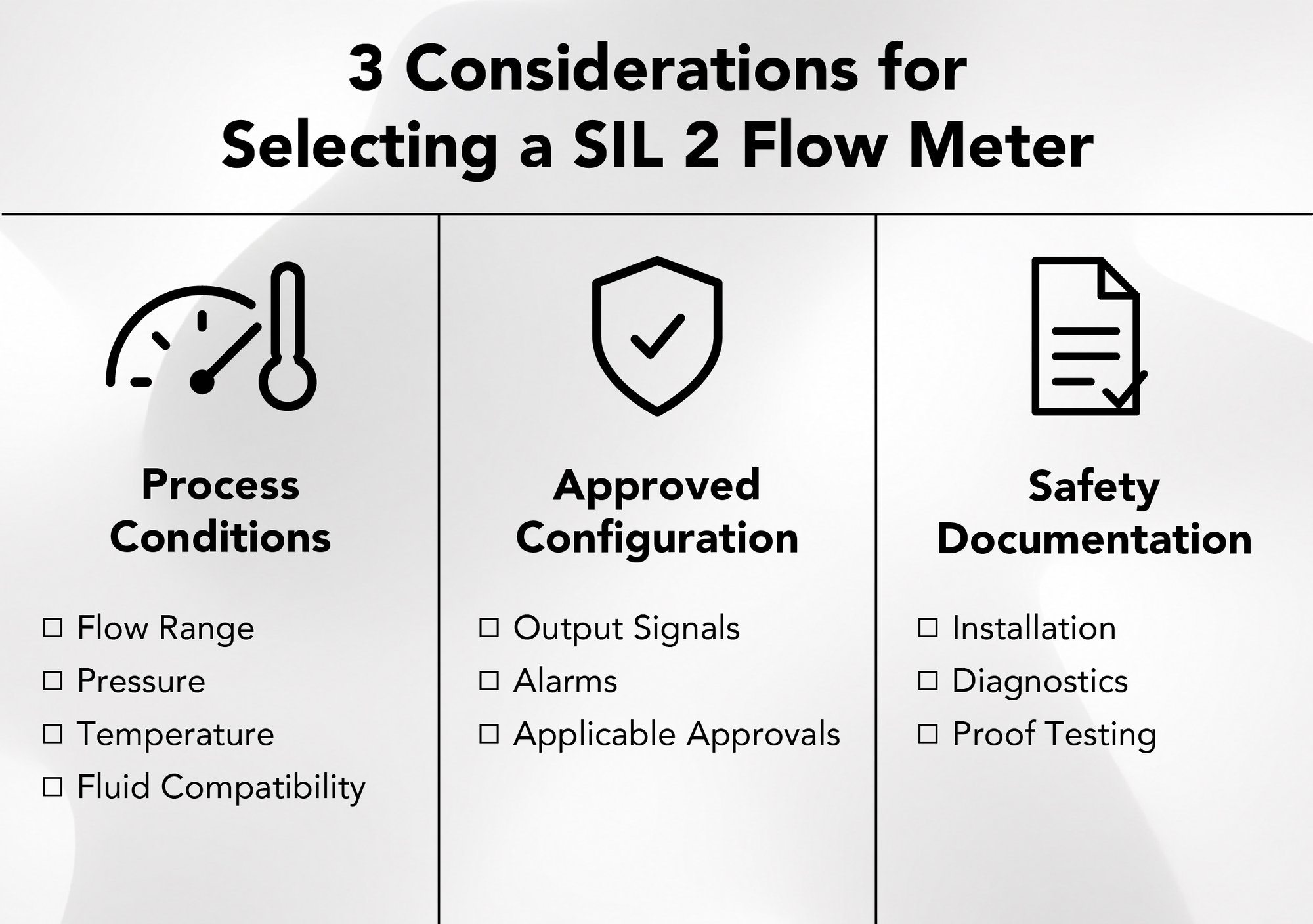
When selecting a flow meter for a SIL 2 safety-related application, engineers should evaluate both the instrument's functional safety capabilities and its suitability for the process conditions. Factors such as flow range, operating pressure, temperature, fluid compatibility and environmental requirements remain essential to reliable measurement.
It is also important to verify that the specific instrument configuration, including its output signals and alarm options, is approved for the intended safety function. Not all configurations of a SIL 2-capable flow meter necessarily carry the same approval.
Engineers should review the manufacturer's Functional Safety Manual for information on approved configurations, installation requirements, diagnostics and proof testing. This documentation helps determine whether the instrument can support the required safety integrity level as part of the overall safety instrumented system.
SIL 2 Capabilities of Brooks Instrument Flow Meters
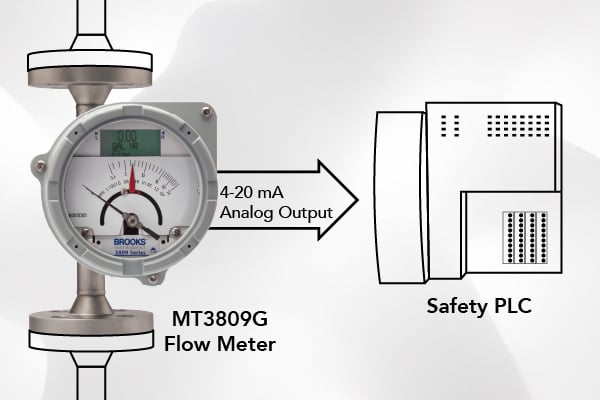
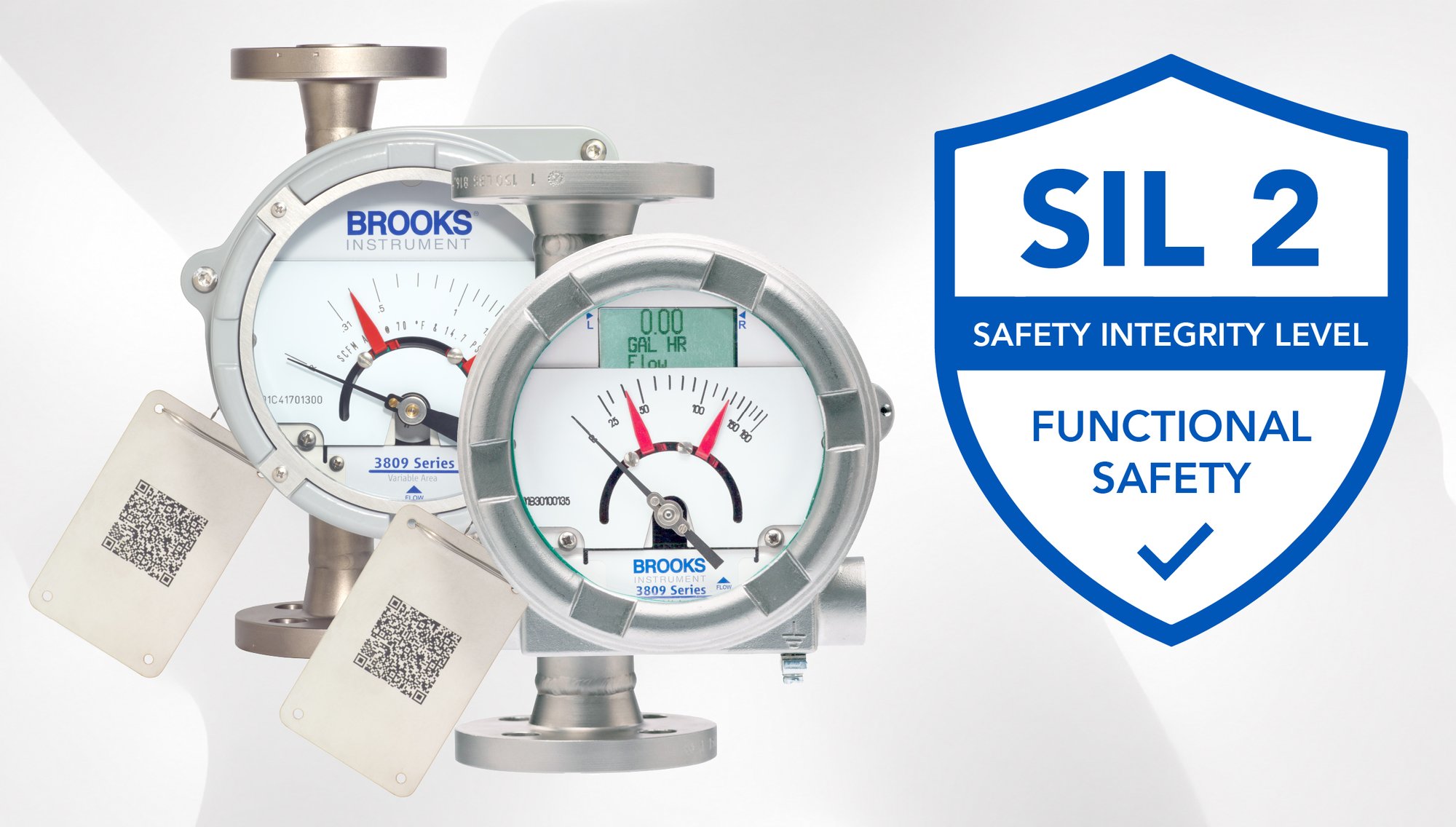
Brooks Instrument offers functional safety capabilities through its MT3809G metal tube variable area flow meter, designed for reliable gas and liquid flow measurement in demanding industrial applications. The MT3809G provides SIL 2 capabilities through mechanical components and alarm configurations, as well as its 4–20 mA analog output, offering engineers flexibility when integrating flow measurement into safety instrumented systems.
The SIL 2 approval for the 4–20 mA analog output expands the MT3809G's capabilities to applications requiring electronic flow measurement as part of a safety instrumented function.
Learn more about the MT3809 Series metal tube variable area flow meter, including available configurations, technical specifications and functional safety documentation.
Frequently Asked Questions
Safety Integrity Levels represent increasing requirements for risk reduction, with SIL 1 providing the lowest and SIL 4 the highest level of safety integrity. Higher SIL levels require a lower probability of dangerous failure for the safety instrumented function.
No. SIL 2 applies to the complete safety instrumented function, not just an individual flow meter or transmitter. The entire safety function, including sensors, logic solvers and final elements, must be evaluated to verify that it meets the required safety integrity level.
SIL 2 capability indicates that an instrument may be suitable for use in a SIL 2 safety instrumented function when the applicable requirements are met. Third-party SIL 2 certification provides independent verification of specified functional safety characteristics within the scope of the certification. In either case, engineers must verify the approved configuration and evaluate the complete safety function.
Discover What’s Possible with Brooks Instrument
Ready to find the right solution? Our experts are here to guide you. Explore products, request support, or connect with a distributor today.