





Technologies
Mass Flow vs. Volumetric Flow
For processes where precision and consistency are critical, understanding the difference between mass flow and volumetric flow measurement is essential to achieving accurate control. While volumetric methods measure the space a fluid occupies, mass flow provides a direct reading of the amount of matter moving through a system, offering greater reliability in applications where temperature and pressure can vary.
Introduction
In many industrial processes, accuracy starts with how flow is defined and measured. Whether you’re introducing gases or liquids into a chemical reaction, blending ingredients in a food application, or managing transfer in oil and gas operations, the difference between mass flow and volumetric flow has a direct impact on performance, quality, and cost.
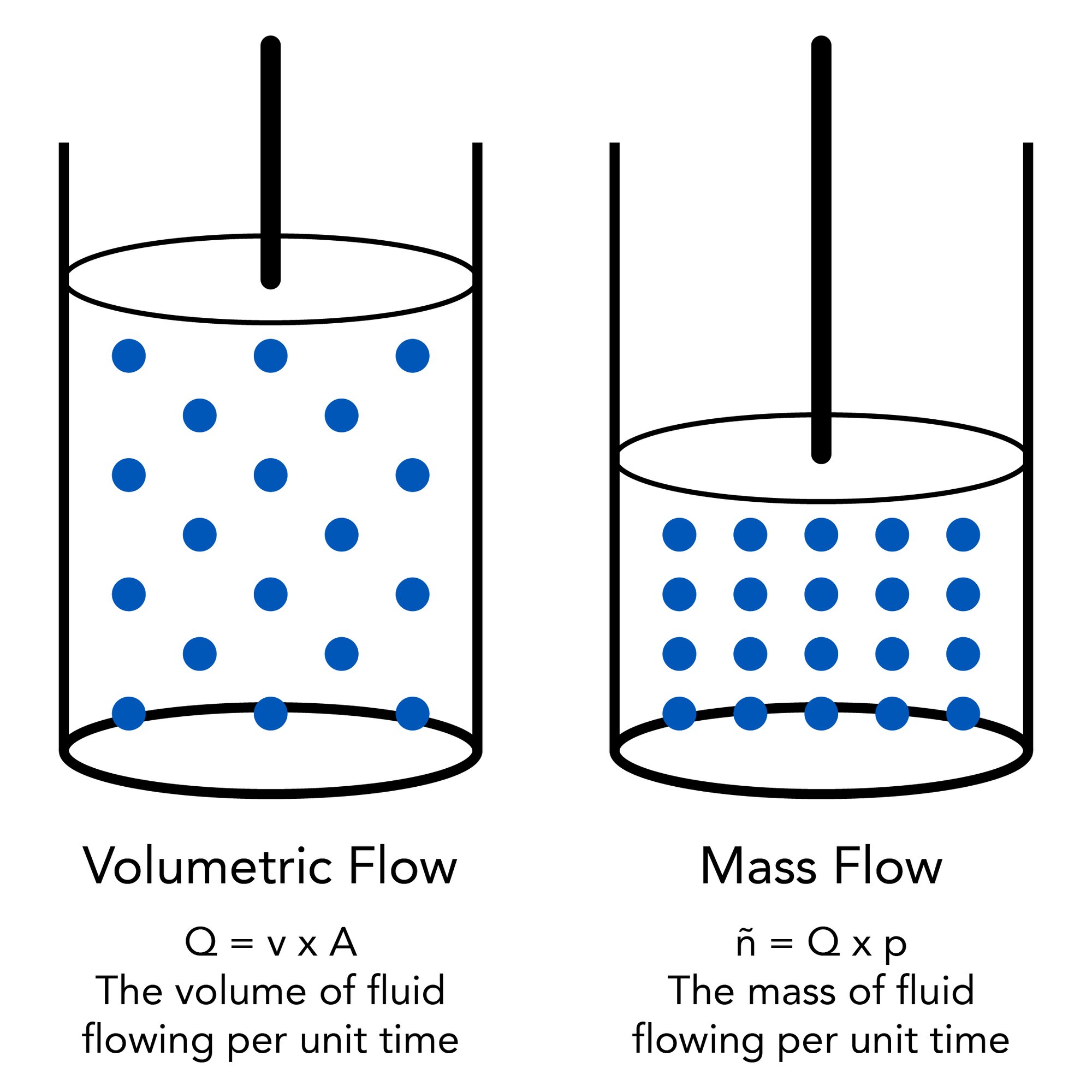
Mass-based measurement reflects the true quantity of material entering a process, making it essential for maintaining precise ratios, ensuring product consistency, and supporting reliable custody transfer. By contrast, volumetric flow measures the space a fluid occupies, which can vary with changes in temperature and pressure, introducing potential uncertainty in critical applications.
Overview
What is Mass Flow Rate?
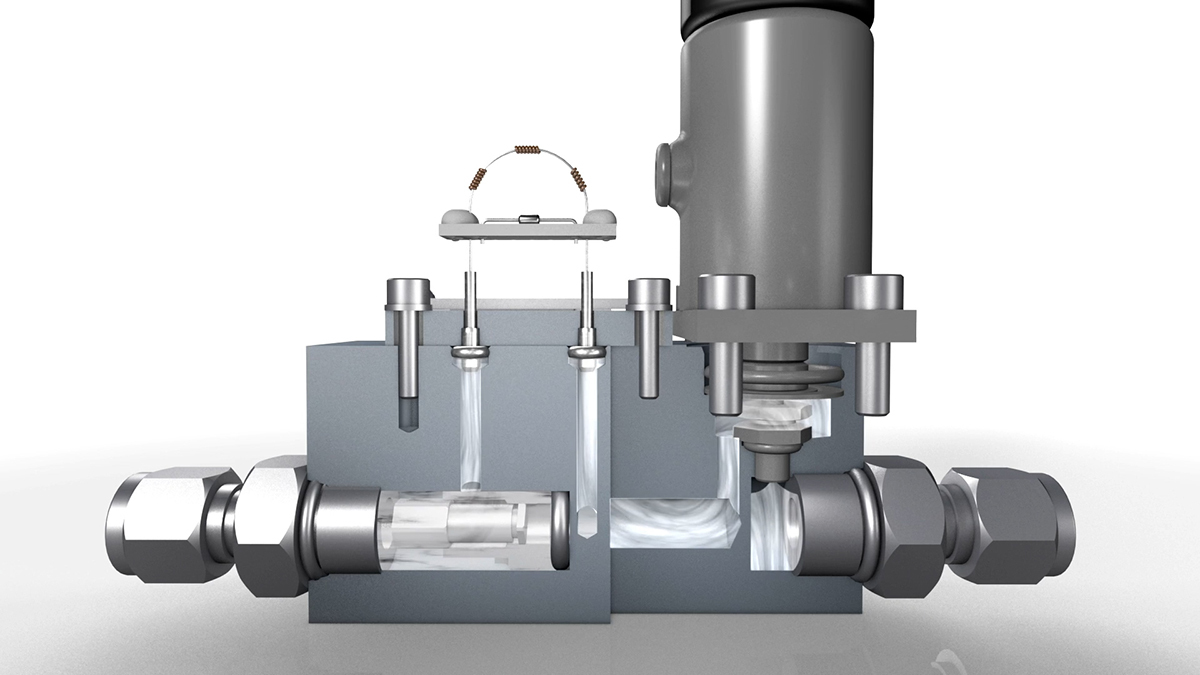
Mass flow rate measures the actual amount of gas or liquid moving through a system over time, typically expressed in units such as kilograms per hour (kg/h) or grams per second (g/s). Because it reflects the true quantity of material, mass flow provides a stable and reliable basis for process control—regardless of changes in temperature or pressure.
How Mass Flow Rate and Volumetric Flow are Related
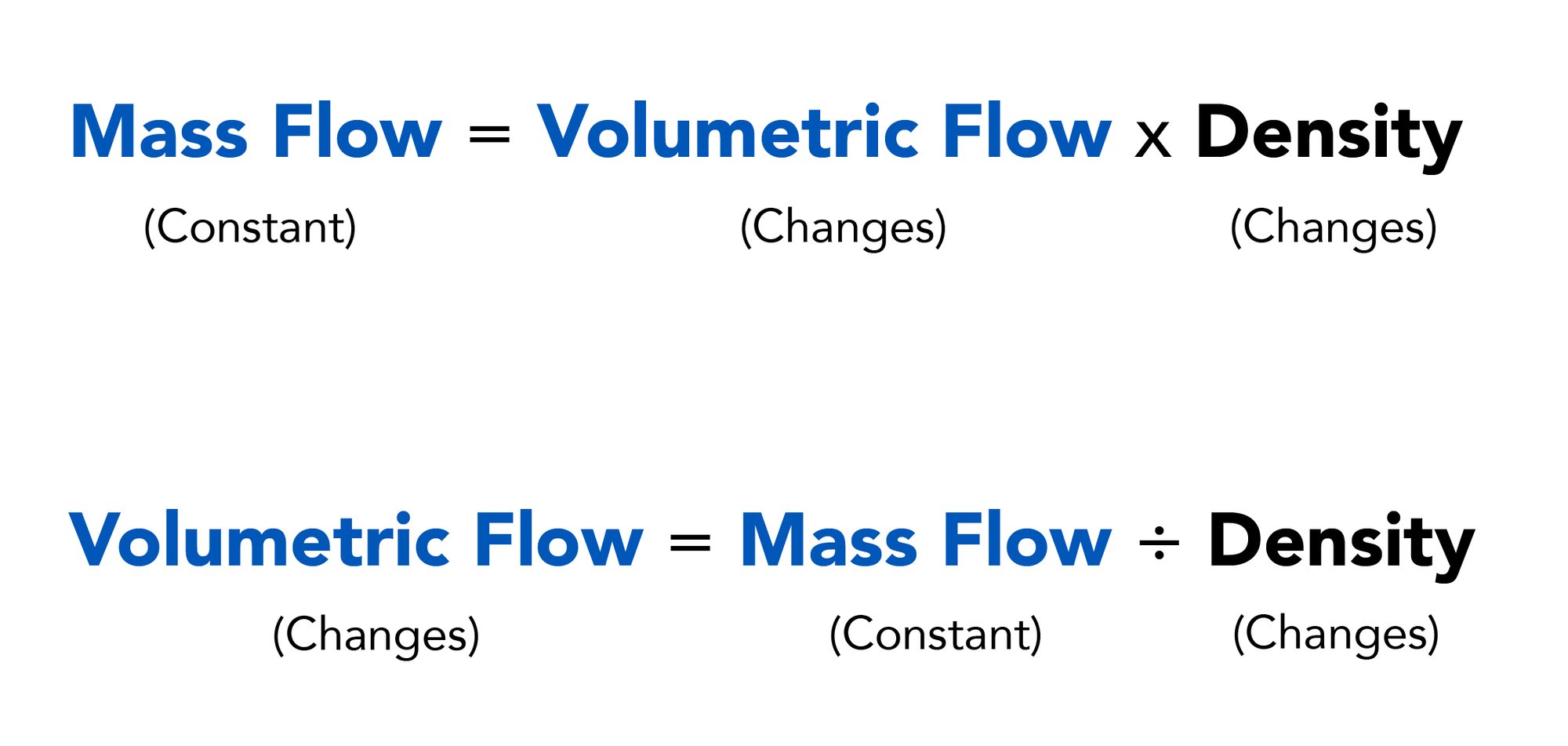
Density serves as the link between the two: volumetric flow can be derived by dividing mass flow by the fluid’s density. Because density itself varies with temperature and pressure—especially in gases—volumetric measurements can shift as conditions change, while mass flow continues to provide a stable and consistent measurement for accurate process control.
Why Choose Volumetric or Mass Flow Measurement?
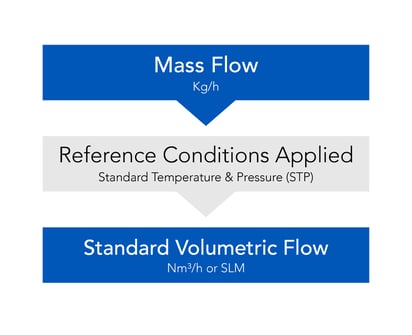
In gas applications especially, volumetric flow is influenced by changes in temperature and pressure, since these conditions directly affect density. To account for this, volumetric flow is often expressed in standardized units based on defined reference conditions, allowing for more consistent comparisons. However, even small differences in these reference conditions can introduce noticeable variation, which is why clearly defining them is essential.
Ultimately, if your process depends on tight control, material balance, or chemical accuracy, mass flow is typically the better choice. If ease of use, system-level monitoring, or legacy standards are the priority, volumetric flow may be more practical. Understanding how each method responds to real-world conditions ensures you select the measurement approach that best supports your performance and reliability goals.
Choosing the Best Mass Flow & Volumetric Flow Instruments
Choosing the right flow measurement technology starts with understanding your process conditions, performance requirements, and control objectives. Whether your application benefits from direct mass flow measurement or requires flow monitoring within volumetric-based systems, selecting the right instrument is key to maintaining accuracy, efficiency, and product quality.
Brooks Instrument offers a comprehensive portfolio of both mass flow controllers and meters designed for precision, stability, and long-term reliability as well as Volumetric flow meters and controllers for real-time measurement. Explore our solutions to find the right fit for your application and optimize your process with confidence.
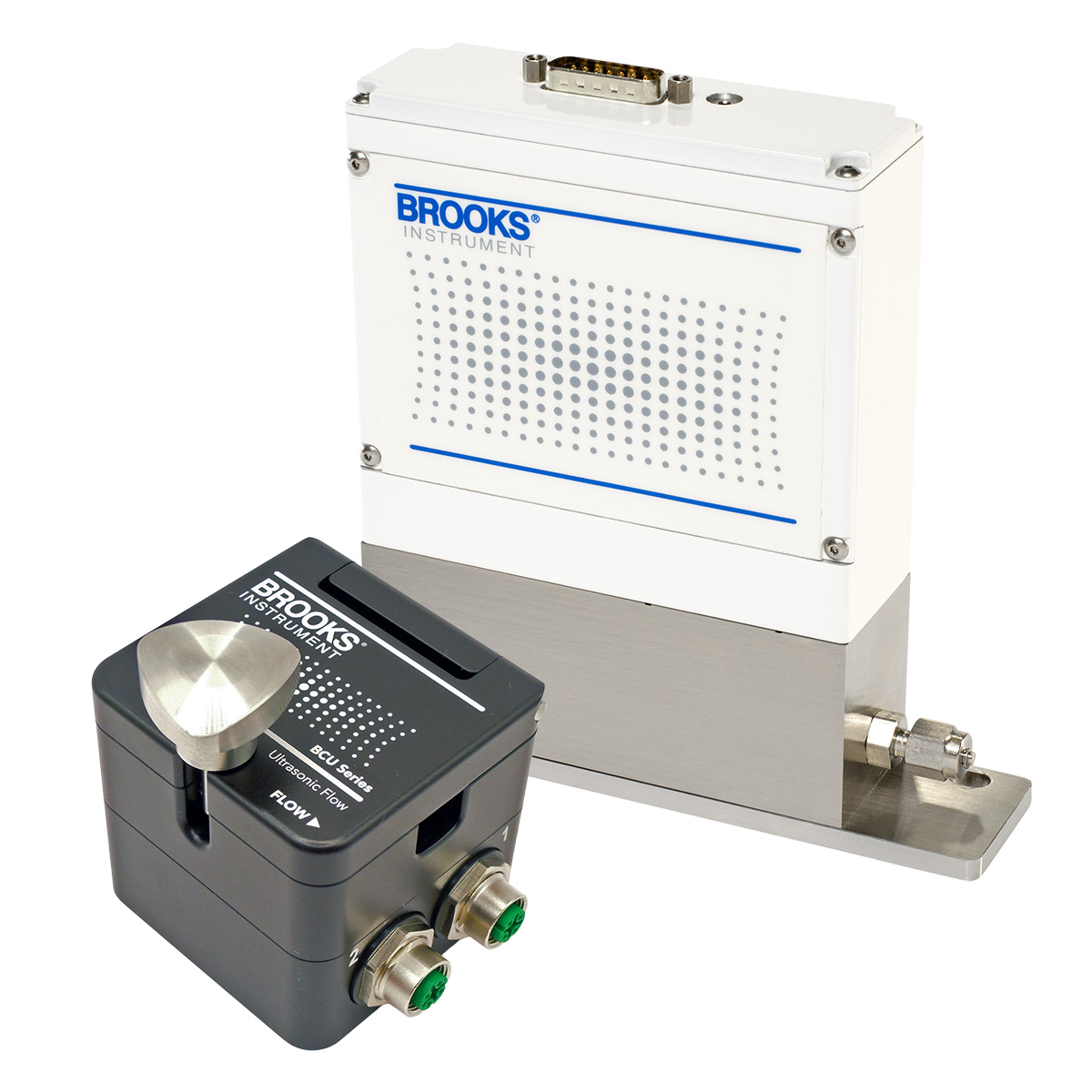
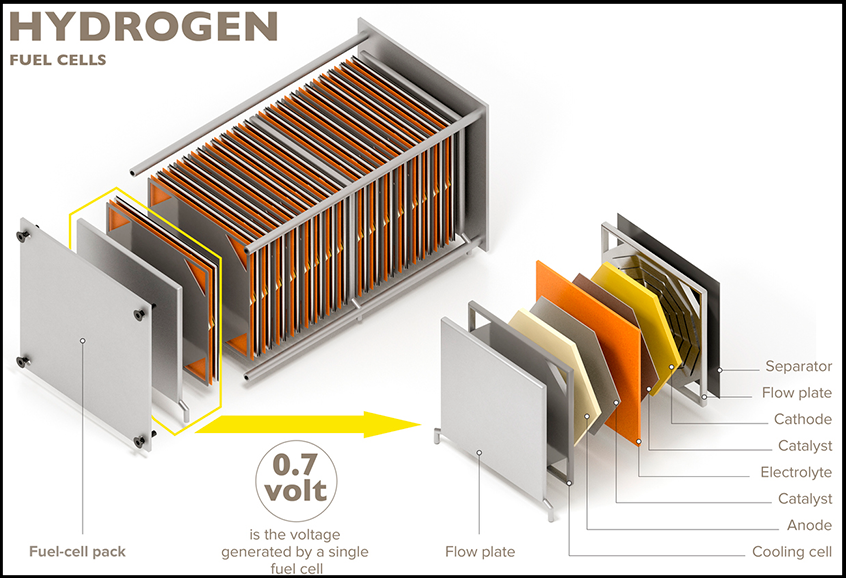
The Brooks Instrument Quantim® QMC Coriolis Mass Flow Meters & Controllers regulates the flow of ionized water during the humidification process in Fuel Cell Test stands. The BCU Clamp-on Ultrasonic Flow Meter is the first clamp-on ultrasonic flow meter purpose-built for single-use or hybrid bioprocessing. It delivers real-time volumetric liquid flow measurement without ever contacting the fluid, preserving sterility and minimizing validation effort.
Explore Mass Flow & Volume Flow Applications

Discover What’s Possible with Brooks Instrument
Ready to find the right solution? Our experts are here to guide you. Explore products, request support, or connect with a distributor today.