



Flow Fundamentals: Principles
What is a Flow Controller?
A flow controller is essential for accurately measuring and regulating the flow of gases and liquids across a wide range of processes. This page provides in-depth explanation of how flow controllers work, the technologies behind them, and how to select the right approach for your application.
Introduction
Precise control of gas and liquid flow is critical across modern processes that demand high accuracy—from semiconductor manufacturing to life sciences and chemical research and processing. Maintaining stable and repeatable flow conditions is essential to achieving consistent performance and reliable results.
This guide explains the fundamentals of a flow controller, including how it operates, the technologies behind it, and where flow controllers are used. It’s designed to provide a clear starting point, whether you’re new to flow control or looking to better understand your current system.
Overview
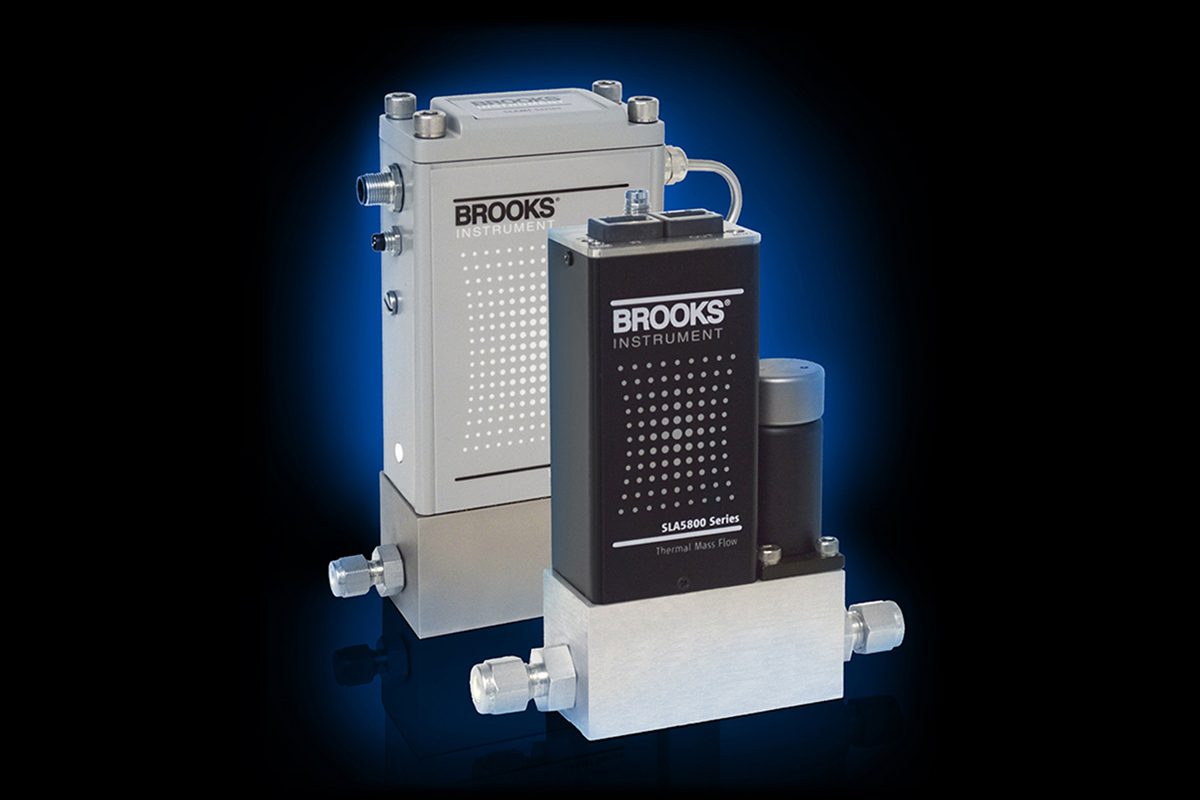
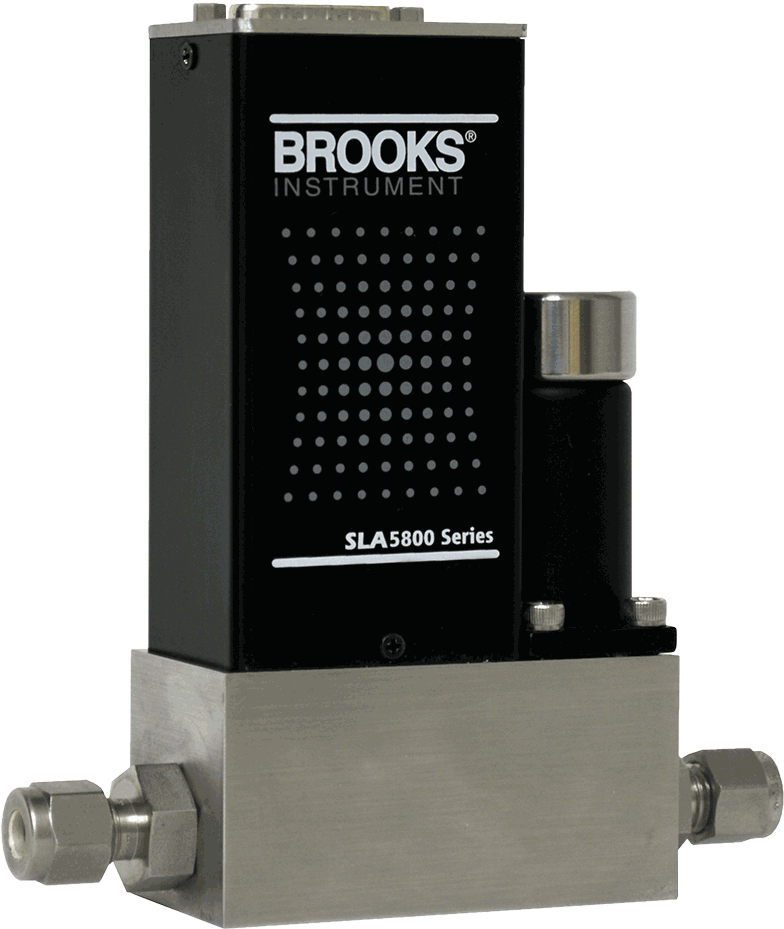
Core Concepts of Flow Controllers
A mass flow controller is a type of flow controller that measures and actively regulates the flow rate of a gas or liquid to maintain a desired setpoint. It combines a flow sensor with a control valve and continuously adjusts the flow in real time to match the target value.
Mass flow controllers are used in applications where maintaining precise, stable flow is critical to process performance, quality, and safety.
The key difference is control. A mass flow meter measures flow only. A mass flow controller measures flow and adjusts it.
A mass flow controller includes an integrated control valve and feedback system that continuously regulates flow to maintain a setpoint. A flow meter provides measurement data but relies on external systems for control.
Mass flow measurement provides a direct, accurate representation of how much material is moving through a system, independent of changes in temperature or pressure.
This is critical in applications where process consistency affects product quality, precise gas ratios are required, and small variations can impact yield or safety.
By measuring mass instead of volume, operators gain more reliable and repeatable control over their processes.
Mass flow measures the actual amount of material moving through a system, while volumetric flow measures the space that material occupies.
Because gases expand and contract with changes in temperature and pressure, volumetric flow can vary even when the actual mass remains constant. Mass flow measurement eliminates this variability, making it more accurate for process control.
What is a Flow Controller?
A flow controller is used to precisely measure and regulate the flow of gases or liquids into a process. By continuously adjusting flow to maintain a defined setpoint, a flow controller ensures stable and repeatable process conditions across a wide range of applications.
Flow can be controlled either as a mass flow rate or as a volumetric flow rate. These two measurements are related through the fluid’s density, which changes with temperature and pressure.
In many industrial and research applications, mass flow control is preferred because it reflects the actual amount of material entering the process. However, volumetric flow control is still used in cases where systems are designed or specified around volume-based units.
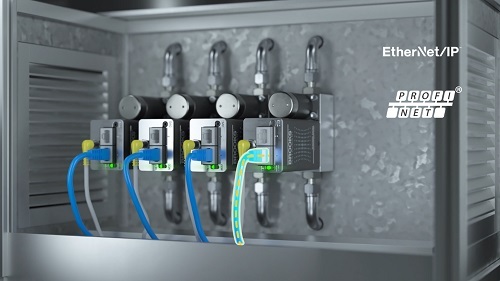
How Does a Flow Controller Work?
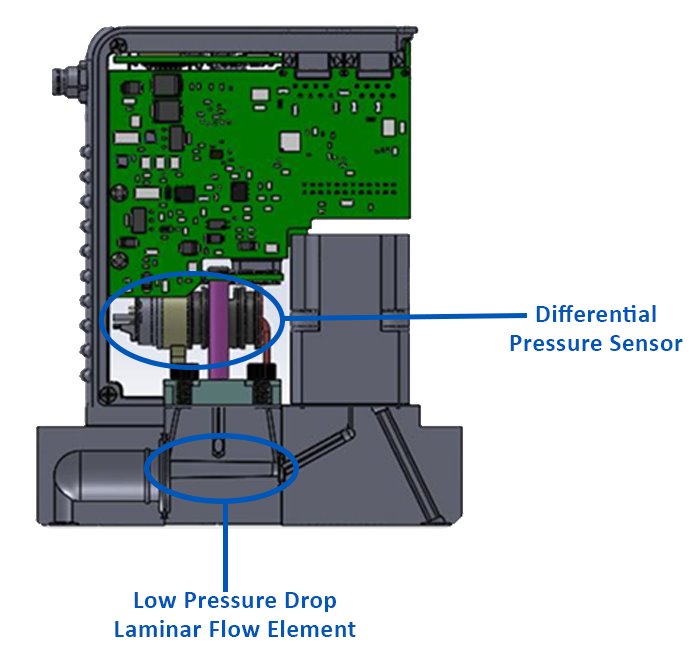
At its core, a flow controller combines a flow sensor, a control valve, and control electronics into a closed-loop system. In thermal mass flow controllers, such as the Brooks SLA Series, gas enters the device and passes through a laminar flow element, which conditions the flow and directs a small, proportional portion across a thermal sensor.
This sensor consists of a heated element and temperature sensors positioned upstream and downstream. As gas flows over the heated element, it carries heat away. The rate of heat transfer is directly related to the mass flow rate, allowing the device to accurately determine how much gas is moving through the system.
The controller continuously compares this measured flow to the desired setpoint. If there is any deviation, the control electronics adjust a proportional control valve located in the main flow path. By opening or closing the valve, the flow controller increases or decreases flow until the measured value matches the setpoint.
This process repeats continuously in real time, enabling precise, stable control even as pressure, temperature, or process conditions change.
Flow Controller Technologies
The type of flow controller or flow meter used in an application is largely determined by the underlying measurement technology. Different sensing principles are suited to different gases, fluids, flow ranges, and accuracy requirements.
Thermal-based flow controllers
Thermal mass flow controllers use heat transfer to measure and control gas flow. As gas passes over a heated sensor, the rate of heat loss is directly related to the mass flow rate, enabling precise and repeatable control.
Brooks Instrument offers a broad range of thermal flow controllers, including the SLA Elastomer-Sealed mass flow controller, designed for high-performance gas applications where stability and accuracy are critical.
Coriolis Flow Controllers
Coriolis-based flow controllers measure mass flow directly by detecting changes in vibration as fluid moves through a sensor tube. This fluid-independent method is ideal for applications involving varying or unknown compositions.
Brooks Instrument’s Quantim® QMC Coriolis mass flow meters and controllers provide highly accurate measurement for liquids and gases without the need for fluid-specific calibration.
.png "gf100-cutaway-no-callouts-3-784px (1)")
Applications of Flow Controllers
Flow controllers are used across industries to actively regulate and maintain precise gas and liquid flow rates in critical processes. Brooks Instrument flow controllers enable stable, repeatable control in applications such as gas blending, pressure-based delivery, and precision fluid handling—where maintaining exact setpoints is essential to process performance.
Browse our application notes to learn how Brooks flow control technologies are applied in real-world systems to improve consistency, efficiency, and overall process reliability.
More Accurate Gas Flow Control for Low Pressure Ozone Applications
A Brooks Instrument GP200 Series pressure-based mass flow controller (P-MFC) can measure and control ozone at very low pressures without contributing to the thermal decomposition of the gas is ultimately required for these conditions.
Mass Flow Controller Drives Chemical Synthesis of Carbon Dioxide into Hydrocarbon Fuels
The SLA5800 model thermal mass flow controller providdes researchers, engineers, and plant operators with the tools they need to advance CO₂ conversion from lab scale to industrial production.
Carbon Nanotube Production Relies on Mass Flow Controllers with Superior Long-term Stability for Accuracy and Control of Multiple Gases
To initiate the growth of high-quality nanotubes, Brooks Instrument mass flow controllers are a critical part of the process in managing and precisely controlling the long-term stability of multiple gas feeds.
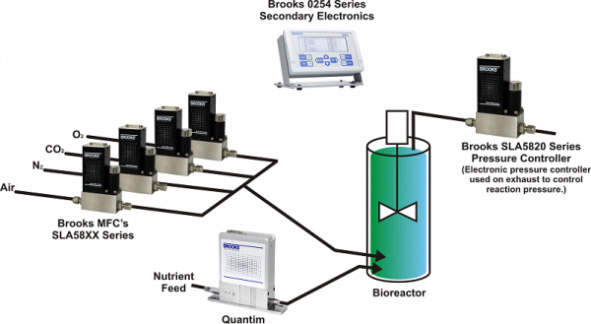
Bioreactors Rely on Mass Flow Controllers to Maintain a Controlled Environment in Biopharmaceutical Manufacturing
Engineered to deliver superior long-term drift stability and the best mean-time-between-failures (MTBF) in the industry, SLA5800 & SLAMf mass flow controllers have earned a reputation of being an industry standard in life sciences applications.
Recap
A stronger understanding of flow control principles, applications, and technologies makes it easier to select the right flow controller for specific process requirements and performance objectives. Flow controllers actively regulate and maintain a desired flow rate, ensuring consistent delivery under varying operating conditions.
A flow controller manage fluid movement using either mass-based or volumetric approaches, depending on the level of precision required. Mass flow control provides highly accurate, condition-independent regulation, making it ideal for processes where consistency is critical. Volumetric-based control, on the other hand, offers a practical and effective solution in applications where simplicity and direct flow indication are sufficient.
A range of technologies, including thermal mass and Coriolis, are used to achieve stable and repeatable flow control. Each technology is suited to different fluids, process environments, and performance demands. Across industries such as semiconductor manufacturing, chemical processing, and energy, selecting the right flow controller helps ensure process stability, optimize efficiency, and maintain long-term system performance.
Discover What’s Possible with Brooks Instrument
Ready to find the right solution? Our experts are here to guide you. Explore products, request support, or connect with a distributor today.