




A stable flow indication depends on more than the flow meter itself. Understanding the effects of pressure fluctuations can help engineers design a more reliable—and more compact—flow measurement system.
Variable area flow meters offer a simple, reliable way to visually monitor the flow of gases and liquids. But when process conditions fluctuate, the indication may fluctuate with them.
One common symptom is a float that appears to “bounce” inside the flow tube rather than settling at a stable reading. While it can look like a problem with the flow meter, the underlying issue may actually be changing pressure conditions in the system.
For engineers designing flow systems, the question therefore isn't simply which flow meter to select. It's also how to maintain the conditions that allow the meter to provide a stable, reliable indication—without unnecessarily increasing system complexity or footprint.
Why Pressure Stability Matters
A variable area flow meter measures flow using a float that rises within a tapered tube until the forces acting on it reach equilibrium. Changes in process conditions can affect that equilibrium and, consequently, the indicated flow.
When line pressure fluctuates, operators may see the float move up and down rather than remain at a stable position. This makes the meter more difficult to read and can make it harder to determine whether the process itself is operating at the desired flow rate.
For applications where pressure variations are expected, engineers should therefore consider flow control and flow indication together, rather than treating them as completely separate design decisions.
The Conventional Solution can Come with a Tradeoff
One way to address fluctuating conditions is to add separate flow-control components to the system.
That may solve the control problem, but it can introduce another challenge: space.
A separate valve or controller can require additional piping, fittings and mounting space. For an OEM designing equipment or an engineer laying out a crowded panel, those additions can make an otherwise straightforward flow measurement point considerably larger.
This raises an important system-design question:
Can you stabilize the flow while minimizing installation footprint?
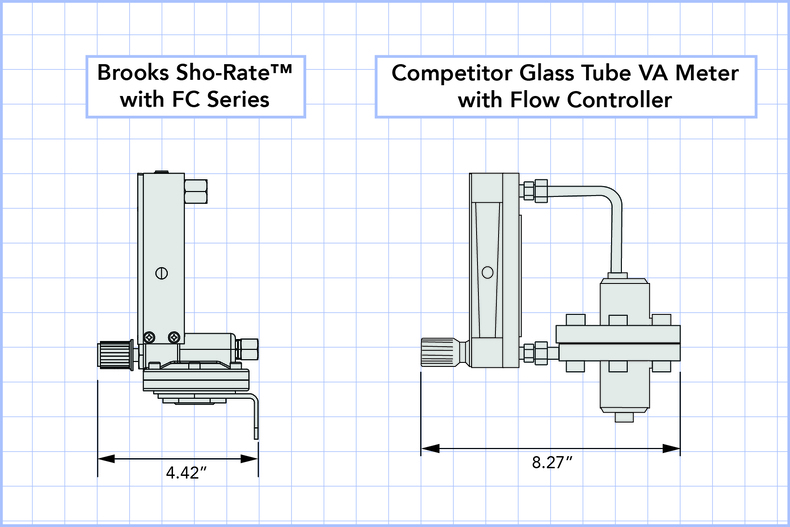
Integral Flow Controller vs. External Flow Controller
An Integrated Approach to Flow Control and Indication
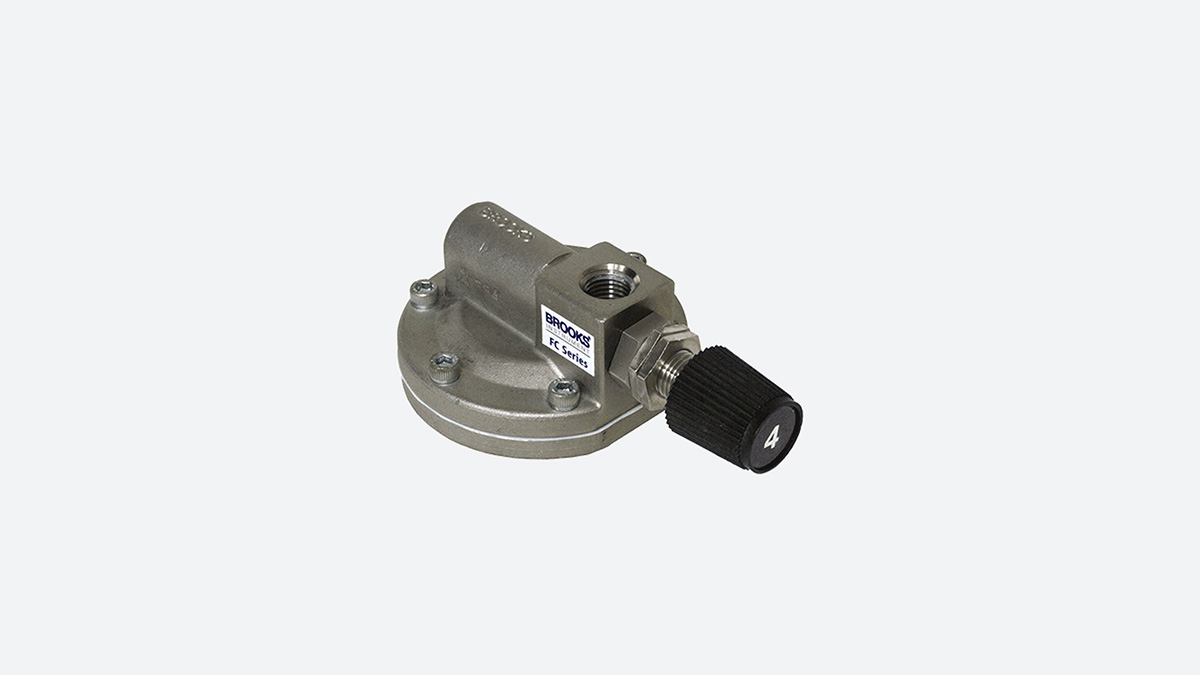
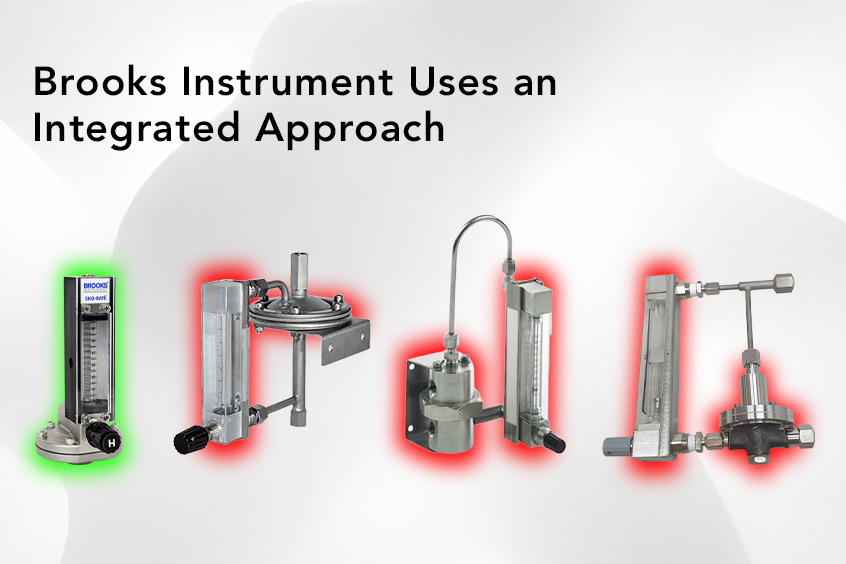
The Brooks Instrument FC Series Flow Controller takes a different approach.
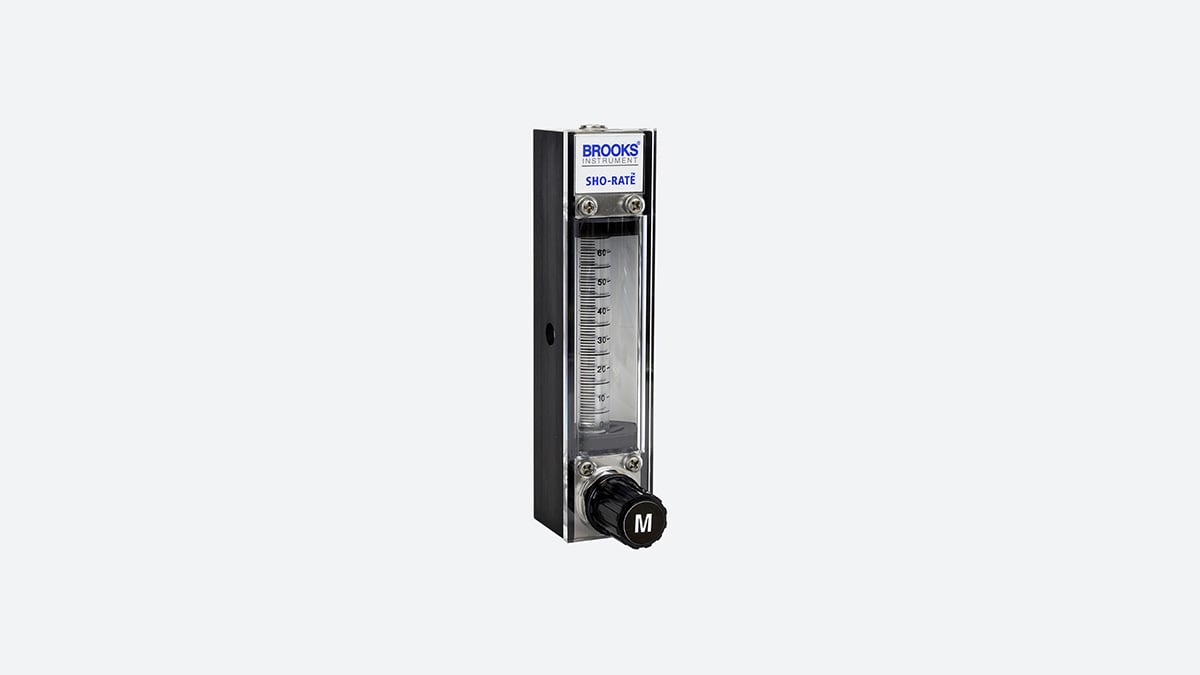
The FC Series combines a diaphragm-actuated control valve with a compatible Sho-Rate® glass tube variable area flow meter. The controller mounts directly to the Sho-Rate flow body, creating an integrated flow control and visual indication assembly.
This approach can help engineers:
- Maintain more stable flow conditions
- Reduce the amount of piping and additional hardware required
- Simplify installation
- Minimize panel and equipment space
- Provide operators with local visual flow indication
The difference becomes particularly relevant in systems where available space is limited. Instead of evaluating the footprint of the flow meter alone, engineers should consider the total installed footprint required to achieve both flow control and indication.
Think Beyond the Dimensions on the Datasheet
This illustrates a broader consideration when comparing flow measurement solutions.
A physically small instrument does not necessarily result in the smallest system.
When evaluating alternatives, consider the components required around the instrument:
How will flow be controlled? What additional valves, fittings or piping will be required? How much panel space will the complete installation consume?
For OEMs in particular, reducing those additional components can simplify equipment design while freeing valuable space for other system functions.
The better comparison, therefore, isn't always meter versus meter.
It's complete solution versus complete solution.
When Should You Consider an Integrated Flow Controller?
An integrated solution such as the FC Series may be worth considering when an application requires visual flow indication but also experiences changing pressure conditions—particularly when installation space is constrained.
Rather than adding control components around a variable area flow meter after the system has been designed, considering flow control early in the design process can lead to a simpler and more compact installation.
Learn more about the Brooks Instrument FC Series Flow Controller and compatible Sho-Rate variable area flow meters